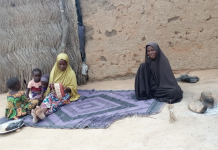

The news of the rescue of the pupils and teachers abducted from Oriire Local Government Area of Oyo State after more than fifty days in captivity was received across Nigeria with immense relief. We thank God for preserving their lives and commend the bravery and sacrifice of the Nigerian Armed Forces and other security agencies whose relentless efforts made this rescue possible. We also remember with gratitude those who paid the ultimate price in the course of the operation.


The nation rejoices because our children are coming home.

Yet, as we celebrate this remarkable achievement, we must not overlook another battle that is only just beginning – the battle for their emotional and psychological recovery.
For many, rescue marks the end of a tragic story.
For psychologists, educators, and child development specialists, it marks the beginning of a long journey toward healing.
These children, some reportedly as young as three years old, have spent over fifty days in circumstances no child should ever experience. While the details of their captivity may not yet be fully known, we know enough about childhood trauma to understand that prolonged exposure to fear, uncertainty, separation from loved ones, disrupted routines, and perceived threats to life can profoundly affect a child’s developing brain.
Unlike adults, children do not always have the language to explain what they have experienced. Their distress often speaks through their behaviour.
A child who was once cheerful may become withdrawn. Another may suddenly become aggressive or unusually fearful. Some may refuse to sleep alone. Others may wet the bed after years of being toilet trained. Many may struggle to concentrate, lose interest in play, become overly attached to caregivers, or panic whenever a parent leaves the room. Some may develop nightmares, heightened startle responses, or intense anxiety triggered by ordinary sounds or situations.
These reactions should never be mistaken for stubbornness, poor discipline, or a lack of resilience. They are often the mind’s attempt to make sense of overwhelming experiences.
Research in developmental psychology consistently demonstrates that prolonged traumatic stress can influence children’s emotional regulation, memory, attention, learning, social relationships, and even physical health. Without appropriate intervention, these effects may persist long after the visible scars have healed.
The teachers deserve equal attention.
Throughout those weeks of captivity, they were not merely victims; many undoubtedly became protectors, comforters, and surrogate parents to frightened children while enduring the same terror themselves. They too may carry invisible wounds—anxiety, depression, intrusive memories, sleep disturbances, emotional exhaustion, or survivor’s guilt. Expecting them to simply return to the classroom without adequate psychological support would be both unfair and potentially harmful.
This moment calls for more than medical examinations and reunions with families.
It calls for a coordinated, trauma-informed national response.
Every rescued child and teacher should receive a comprehensive psychological assessment conducted by qualified mental health professionals. Not because we assume everyone has developed a mental illness, but because early identification of trauma-related difficulties significantly improves long-term outcomes.
Families also need guidance.
Parents will understandably be overjoyed to have their children home, but many may be uncertain about how to respond to behavioural changes. Well-intentioned action, pressuring children to recount their experiences, expecting immediate normalcy, or dismissing signs of distress, can unintentionally complicate recovery. Parents and caregivers need practical, culturally appropriate education on supporting healing through patience, consistency, reassurance, and sensitive communication.
Schools likewise have a critical role.
Returning to school represents hope and normalcy, but it can also provoke anxiety. Schools should adopt trauma-informed reintegration plans that allow flexibility, provide access to school counselors and psychologists, prepare teachers to recognize trauma responses, and create emotionally safe learning environments.
The goal should not simply be to help these children return to school.
It should be to help them return to learning, trusting, playing, and dreaming again.
This tragedy also exposes a broader national need.
Nigeria requires an established framework for responding to child victims of kidnapping, terrorism, communal violence, and other traumatic events. Such a framework should bring together pediatricians, psychologists, psychiatrists, social workers, educators, speech and occupational therapists where necessary, child protection agencies, faith leaders, and community organizations in a coordinated effort to support recovery.
Trauma recovery should never depend solely on the goodwill of individual professionals.
It should be embedded within our national emergency response system.
As a nation, we rightly celebrate the courage of those who rescued these children.
Now we must demonstrate equal commitment to restoring what captivity may have stolen – their sense of safety, their confidence, their joy, and their hope for the future.
The true measure of this rescue will not simply be that these children survived.
It will be that they are given every opportunity to heal, flourish, and become emotionally healthy adults despite what they have endured.
Bringing them home was the first victory.
Helping them heal must be the second.
As Nelson Mandela wisely observed, “There can be no keener revelation of a society’s soul than the way in which it treats its children.”
Nigeria has brought these children home.
Now let us show the soul of our nation by helping them heal.
Dr. Ifueko Omowunmi Thomas is an educator, school improvement consultant, Advanced Certified Autism Specialist (IBCCES), and doctoral researcher in Developmental Psychology at Liberty University. Her work focuses on early childhood mental health, inclusive education, and trauma-informed practice.
 We do everything possible to supply quality news and information to all our valuable readers day in, day out and we are committed to keep doing this.
Your kind donation will help our continuous research efforts.
-Advertisement-

-Want to get the news as it breaks?-