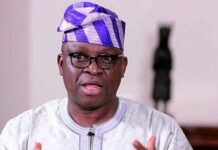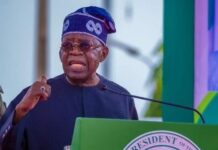

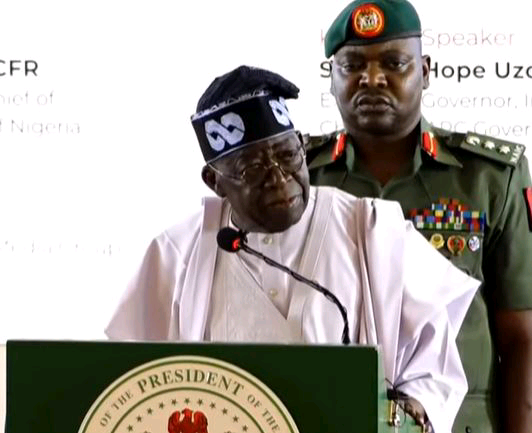
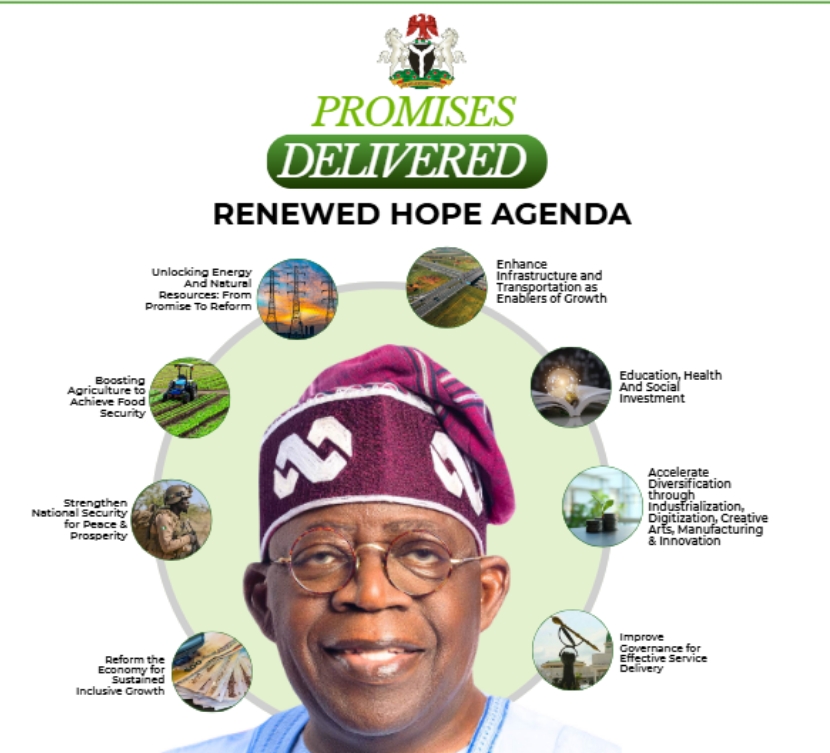
Nigeria is gearing up for another presidential election scheduled for 2027, now roughly 300 to 305 days away, depending on the exact date to be announced by the Independent National Electoral Commission. In the meantime, the country’s incumbent president, Bola Ahmed Tinubu, who assumed office on May 29, 2023, has faced extensive scrutiny and evaluation from a broad spectrum of Nigerians over his 1,064 days in office. In this report, Eboselume Olutola presents perspectives from citizens across various parts of the country, capturing their views on the president’s performance and the prospects of his political future.
Bola Ahmed Tinubu, a former senator and governor, was widely portrayed as a master strategist and economic reformer in the lead-up to the 2023 general elections, with supporters crediting him for laying the foundation for the growth and transformation of Lagos State.
Upon assuming office in 2023, the President embarked on a series of far-reaching policy decisions described by his administration as bold reforms, though the measures have continued to attract mixed reactions from Nigerians amid their socio-economic impact.


While Nigeria has yet to attain the level of prosperity many citizens desire, the Tinubu administration has consistently maintained that it has recorded notable achievements across key sectors and is steering the country toward sustainable growth and long-term development.
Meanwhile, political activities ahead of the 2027 general elections have begun to gather momentum, with alliances being formed, consultations intensifying, and grassroots mobilization taking shape across party lines.
Despite these developments, President Tinubu has not formally declared his intention to seek re-election, even as the All Progressives Congress (APC) has endorsed him as its sole candidate, signaling growing support within the ruling party.

Against this backdrop, FrankTalkNow decided to conduct a public opinion survey to gauge Nigerians’ assessment of the President’s performance so far, as well as their views on a possible re-election bid should he decide to contest in 2027.
What Nigerians think of Tinubu’s performance so far
Mixed reactions have continued to trail the administration of Bola Ahmed Tinubu, as Nigerians express divergent views on the impact of recent economic and social policies, with many particularly reacting to reforms such as the removal of fuel subsidy.
In separate interviews, some citizens criticised the government’s decisions, arguing that the policies have worsened living conditions and deepened economic hardship across the country.
For instance, Chisom Ebubechukwu lamented the situation, saying, “The president has brought hardship, especially with the removal of fuel subsidy and everything that followed.”
She further recounted a personal loss linked to the economic strain, adding, “It became so bad that I lost my sibling because we could not afford hospital treatment.”
Similarly, a student of Obafemi Awolowo University, Usman Mubarak, decried the rising cost of education, stating, “School fees and hostel accommodation have increased significantly, making things difficult for students. I remember what I paid in part one. As a part four student, I know how much I have suffered in order to meet up with expenses. These days we find it difficult to eat balanced nutritious meals as a large aspect of our upkeep is spent on getting materials and commuting.”
However, he acknowledged a positive intervention by the government, noting, “I appreciate the student loan scheme introduced by the president. As a beneficiary, NELFUND assisted me to remain in OAU. The monthly stipend also helped to augment the little I receive from home.”
On the other hand, Dada Oladapo, a resident of Ogun State, expressed optimism about the administration, saying, “I believe in the president and I am certain he has the nation’s interest at heart,” adding, “He inherited many problems, so Nigerians need to be patient and allow time for the results to start showing.”
Read More: APC fixes presidential primary for May 23 in revised timetable
The civil servant further disclosed that his staunch believe in Mr. President is deep rooted in his antecedents from his days as an activist to his time in elective office.
What Nigerians think about Tinubu’s future
As conversations around Nigeria’s next general elections gather momentum, a number of politically aware citizens and analysts were benevolent enough to hazard predictions about the possible outcome, particularly if President Bola Ahmed Tinubu decides to seek re-election.
Across different quarters, opinions remain divided, reflecting both confidence in the power of incumbency and caution about the unpredictability of Nigeria’s political terrain.
In a virtual test-a-tete with Bode Famakin, a political analyst based in Ekiti State, he maintained that the sitting president may hold a strategic advantage heading into another electoral cycle.
According to him, incumbency has historically played a decisive role in Nigerian elections, often tipping the balance in favour of those already in power due to established political structures, access to state resources, and wider name recognition.
He further explained that, with the exception of former President Goodluck Jonathan, who lost his re-election bid in 2015, no Nigerian president has failed to secure a second term since the return to democratic rule in 1999. In his words, “The weight of incumbency in Nigeria cannot be underestimated. It comes with institutional advantages and political leverage that are difficult for opposition candidates to overcome. Except for the unique circumstances that led to Jonathan’s defeat in 2015, history suggests that sitting presidents often have the upper hand. Moreover, we all have witnessed how Tinubu has strategically placed his people in different pivotal roles within the country. Only a miracle can bring about his defeat.”
However, not all observers share this optimistic projection. Offering a contrasting perspective, Nelson Bright, a student leader at the Federal University, Oye Ekiti, cautioned against drawing firm conclusions this early.
He noted that Nigerian politics is fluid and can shift rapidly, particularly as new alliances emerge and public sentiment evolves in response to economic and social realities.
Bright pointed to the growing visibility of opposition parties, including the African Democratic Congress, as evidence that the political space is becoming increasingly competitive.
“We are beginning to see renewed energy among opposition groups, and that could reshape the dynamics ahead of the election. Politics is not static; what seems certain today may change tomorrow. Moreover, Nigerians are tired. Forget the noise from the City Boy Movement, Nigerians are desperately in need of change. If they get an option today, I can assure you that they will support such a candidate. Ultimately, it is the electorate that determines the outcome, not just historical patterns,” he said.
Beyond these differing viewpoints, analysts note that several key factors will likely shape the eventual outcome of the polls. These include the state of the economy, public perception of government policies, youth participation, and the ability of opposition parties to form a united front.
In recent years, voter awareness and engagement have also increased, suggesting that electoral decisions may be influenced by a broader range of considerations than in previous cycles.
In the final analysis, the first term of Tinubu’s administration has been marked by a mix of significant reforms, contentious policies, and shifting public reactions. While some Nigerians point to bold economic decisions and governance initiatives, others highlight the challenges of inflation, cost of living, and social adjustment.
As such, although early projections continue to stir debate, the trajectory of the coming election remains uncertain, leaving many to watch closely as the political landscape unfolds.
 We do everything possible to supply quality news and information to all our valuable readers day in, day out and we are committed to keep doing this.
Your kind donation will help our continuous research efforts.
-Advertisement-

-Want to get the news as it breaks?-