





The Federal Government has set a target to reduce Nigeria’s public debt to 18.83 per cent of Gross Domestic Product (GDP) by 2030, while increasing government revenue to 18.70 per cent of GDP as part of efforts to strengthen the country’s fiscal position and secure an investment-grade credit rating.


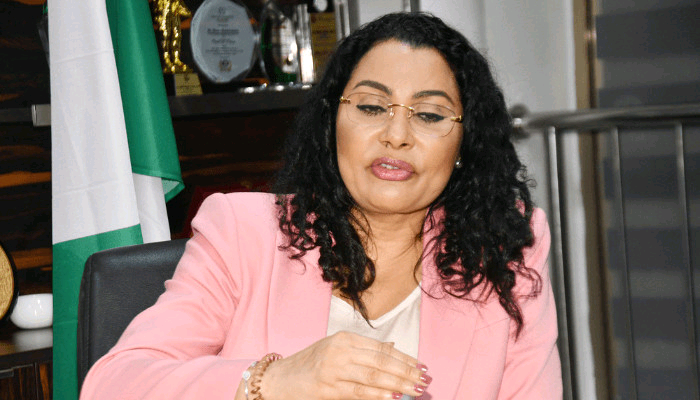
The Minister of State for Budget and Economic Planning, Dr Doris Uzoka-Anite, disclosed this at the 2026 International Credit Rating Webinar organised by DataPro Limited, themed “Achieving Investment-Grade Rating by 2030: The Roadmap for Nigeria”.
According to the minister, the government intends to reduce public debt from 36.07 per cent of GDP in 2025 to 18.83 per cent in 2030, while raising revenue from 11.15 per cent to 18.70 per cent over the same period.

She said the debt-service-to-revenue ratio is also projected to decline from 62.93 per cent in 2025 to 21.01 per cent by 2030, reducing the proportion of government revenue consumed by debt repayments.
Uzoka-Anite, however, cautioned that the figures were targets rather than guaranteed outcomes, noting that their achievement would depend on effective implementation of fiscal reforms, stronger revenue mobilisation and improved collection efficiency.
She said a sustainable fiscal position was essential to strengthening Nigeria’s creditworthiness and reducing the cost of accessing capital for both the government and private businesses.
FG targets stronger revenue, lower borrowing costs
The minister said the government planned to broaden the revenue base, improve tax compliance, digitalise revenue administration and reduce dependence on volatile oil earnings.
She identified the removal of the petrol subsidy, foreign exchange market reforms and the enactment of four major tax laws in 2025 as part of the reforms underpinning the government’s fiscal projections.
Uzoka-Anite stressed that increasing revenue must be accompanied by more efficient public spending to ensure that available resources deliver tangible economic benefits.
Under the plan, capital expenditure is expected to rise from 36.03 per cent of total government spending in 2025 to 57.43 per cent by 2030.
She said the proposed shift would direct more public resources towards infrastructure, healthcare, education and human capital development, with the aim of strengthening productive capacity and supporting long-term economic growth.
On debt management, the minister said future borrowing would be directed towards investments capable of expanding productive capacity rather than deepening existing fiscal pressures.
She added that the government would continue to strengthen debt management, manage refinancing risks and deepen the domestic capital market through instruments such as Sukuk, green bonds and public-private partnerships.
The minister also cited an International Monetary Fund estimate that Nigeria’s consolidated fiscal deficit stood at 4.4 per cent of GDP in 2025, highlighting the need for continued fiscal adjustment and improved revenue generation.
She said meeting the 2030 targets would be important for restoring investor confidence and positioning Nigeria to secure an investment-grade credit rating.
DataPro identifies key conditions for investment-grade status
Also speaking at the webinar, the founder of DataPro Limited, Abimbola Adeseyoju, said credit ratings had become important determinants of investment flows, borrowing costs and countries’ capacity to finance infrastructure and industrial development.
He described sovereign ratings as gateways to international capital markets, noting that stronger ratings could improve access to the long-term financing needed to support economic development.
Adeseyoju said attracting patient capital and building economies capable of withstanding external shocks had become increasingly important for African countries.
He identified three priorities for Nigeria’s investment-grade ambition: structural reforms and fiscal sustainability; deeper capital markets and greater transparency; and objective credit-rating methodologies that adequately reflect African economic realities.
He said progress in these areas would be crucial to improving Nigeria’s standing with investors and strengthening its access to international finance.
 We do everything possible to supply quality news and information to all our valuable readers day in, day out and we are committed to keep doing this.
Your kind donation will help our continuous research efforts.
-Advertisement-

-Want to get the news as it breaks?-